
If you have ever wondered how to grow vegetable at home in india without a big garden, the good news is that you only need a sunny corner, a few containers and a little patience. Thousands of Indian families now grow coriander on kitchen windowsills, chillies on balconies and tomatoes on terraces, and most of them started with no experience at all. A few years ago, my neighbour in Gurugram laughed when I said I would grow tomatoes on a small balcony. Three months later, she was asking me for chillies. This guide walks you through the basics first, then 12 vegetables that suit Indian conditions, and finally the mistakes that trip up most beginners.
How to Grow Vegetables at Home Makes Sense in India
Typically, every Indian kitchen uses coriander, chillies, mint, and tomatoes daily, and the market price can rise and fall significantly week by week. Cultivating just a few of these at home can save you quite a bit over the course of the year. Aside from the savings, you get to know precisely what is being fed to your plants. This is important if you’re concerned about pesticide residue on vegetables bought from the market. There is a quieter benefit too. Watching a seed turn into a plant is one of the calmest ways to start a morning, and children who grow a tomato themselves are far more likely to eat one. And then there is the taste. A tomato picked at seven in the morning and eaten at lunch has little in common with one that travelled for three days in a truck. 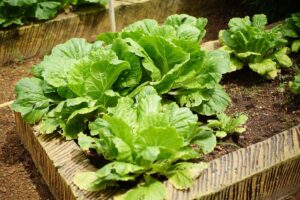
The Basics of How to Grow Vegetable at Home
Before you buy a single seed, it helps to do four things right: sun, containers, soil and season. First-time growers who sort these out quickly tend to succeed, and those who don’t know what to do complain about the seeds.
Start With the Sunlight You Actually Have
Most vegetables need four to six hours of direct sun daily. Although fruiting plants, such as tomato, brinjal and chilli, will require six or more hours, leafy vegetables such as spinach and coriander will be quite content with three to four hours. Spend a day just observing the sun on your balcony or terrace and note when the sun is going to hit your balcony or terrace. It can be quite unexpected when the light that reaches you is very different from what you’d expect. A north-facing balcony will be less than ideal for fruiting plants but good for methi, palak and mint.
Choose Containers That Drain
Anything can be turned into a planters – grow bags, plastic buckets, paint tins and storage boxes that are broken – as long as they have holes in the bottom, to drain off excess water. Too much waterlogged soil kills plants faster than dry soil, and rot is the single most common cause of beginner plant deaths. Depth is important too – leafy greens, herbs, radish etc. are happy in four-to-six-inch pots, chilli, beans, spring onion grow well in about 10 inches of soil depth, and tomato, brinjal, okra and capsicum need 12 inches of soil depth to grow happily. Fabric grow bags are a good idea for India – they’re light, cheap and allow the roots to breathe, even in the hottest weather.
Mix a Soil That Stays Loose
The garden soil, when filled in a pot will become a lump of hard soil, so some body needs to be added to it. The best combination is four parts of garden soil, leaf compost or cocopeat – 3 parts, vermicompost or cow dung manure-3 parts. The cocopeat retains water but does not make it soggy and the compost is a nutrition for the plant right from day one. Mix a handful of neem cake powder in each pot.
Match Your Vegetables to the Season
India has three main cropping seasons, and the less you worry about the ordering the vegetables will go in your garden the better: The first season is October-February; cold season and suitable for tomato, spinach, methi, carrot, radish, peas and cauliflower. The second season is February-June; warm weather is suitable for okra, cucumber, bottle gourd and chilli. The third is June-September; monsoon time is suitable for okra, beans, brinjal and coriander, however fungal attack is a problem with excessive humidity. Since it’s the end of October, you are just at the start of the best vegetable season in North India, so it is a good time to plant many of the vegetables listed below. 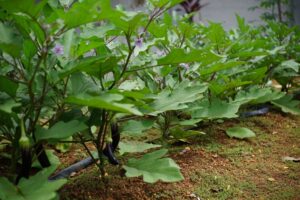
12 Easy Vegetables to Grow at Home in India
1. Coriander (Dhania)
Dhaniya The perfect starter crop, as it tolerates most conditions. Slightly crush the dhania seeds, soak overnight and sow in a wide pot. The plants will germinate within 7 to 10 days, and can be cut within a month or so. Perfect for cool weather, it will bolt in the height of summer so sow a new pot every two weeks if you want a constant supply.
2. Spinach (Palak)
It also can be grown quickly and in shadier areas of the garden because it tolerates partial shade, so it works well in balcony gardens that don’t get a lot of sunlight. Sow the seeds 1/2 inch deep in the soil, water frequently, and start harvesting the outer leaves in 30-40 days.Clip and not uproot it and it can grow for weeks.
3. Fenugreek (Methi)
Methi may be the easiest vegetable on this list.Just sprinkle the seeds on the wet ground, lightly cover it, and in two to three weeks you will be harvesting the leaves. It is perfect for shallow trays too, so even a very small corner in your roof garden works.
4. Green Chilli (Hari Mirch)
Chillies thrive in the Indian climate and tolerate irregular watering. Use a seed or a small nursery-sized plant, pot up to a 12 inch pot, and place in 6 hours of direct sun. Start in 60 to 75 days, and if grown well, it will frequently fruit for months at a time, so it’s space-efficient.
5. Tomato
Tomatoes need a little more patience and a little bit of help. Select a deep container, situate it in bright sun, and as it climbs up, attach the plant to a stake. Give a good drink of water (but not every day) – inconsistent watering causes cracking in the fruit. Cherry tomato cultivars are more forgiving to beginner growers and will fruit before the big ones do. 70 to 90 days after transplant. 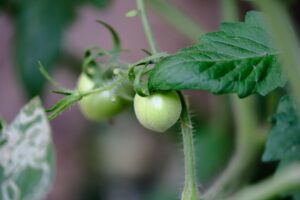
6. Brinjal (Baingan)
Brinjal loves heat and will become indolent after it’s fully established. Consume a pot of fifteen inches and continue to feed it regularly with compost. Collect brinjal fruit when the skin is still shining, otherwise it is mature. That have the large and difficult to use seeds.
7. Okra (Bhindi)
Bhindi loves Indian summers and monsoons. How does bhindi grow? The seeds have a hard coat so soak it in a mug of water the night before planting to get a good sprout, and it will take between 50-60 days for the plants to start cropping. Do every second day while it’s tender as it may turn woody quite fast.
8. Mint (Pudina)
Each variety of mint can almost look after itself – it grows vigorously, so give it a pot all of its own. Drive some stems into moist soil and wait for roots to develop over a week or so. Likes the shade so it’s good for a little bit shadier balcony.
9. Radish (Mooli)
Radishes are quick-to-grow: 25-40 days Radish is one of the quickest vegetables you’ll be able to grow, and you possibly can typically harvest by 25 to forty days. Plant the seeds immediately in a pot about 10 inches deep, as radishes do not enjoy being transplanted.
10. Spring Onion (Hara Pyaz)
This one starts with a kitchen-scrap trick. Take the white root ends of spring onions you have bought, keep them in a glass of water for three to four days until fresh roots appear, and then plant them in soil. Green tops are ready in two to three weeks, and they regrow every time you cut them.
11. Cucumber (Kheera)
Support cucumbers with a trellis, a bamboo frame or a few strands of netting. They’re heavy feeders that love the sun and water. You should get your first yield in 50 to 60 days, and be sure to pick the fruit often – if you leave cucumbers on the vine, the plant’ll shut down its production.
12. French Beans (Farasbi)
Bean plants don’t take much time to grow and they add nitrogen to the soil – these are super easy crops. Bush types are not tall and perfect for a pot. Climbing types can be trellised. Pods are normally in 50-55 days and in cooler weather.
How to Water Your Home Vegetable Garden Properly
You would be surprised how many plants die for lack of water. You can never water too little, it is always too much. The great tip is the finger test – drive a finger down to 1″ of your plant’s soil, if dry water the plant and if it’s damp don’t water it another day. During summer you should water in the early morning then again in the evening if the soil is not wet, while plants in winter can go a couple of days to a day without water. Stop watering during monsoon, use the drainage holes, clean the leaves in the evenings because the soil from plant leaves also comes to the fungi, and here is what you need to do.
Feeding Your Plants Naturally
Nursery shrubs and container-grown vegetables – the ones in pots – require more feeding than those that are grown direct into the ground, so feed regularly. The secret is to top up with a handful of vermicompost (worm casts) every two to three weeks – or make your own liquid feed from bananas or used tea leaves by soaking them in water for a few days every month. Commercially available seaweed or compost teas are great, and a teaspoon of bone meal assists flowering and fruiting plants. Don’t go overboard with chemical fertilisers: in time, they will threaten the health of your soil by “building up” salts. 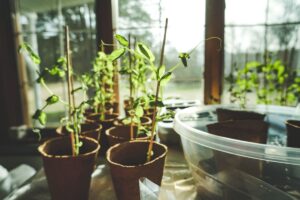
Common Pests and Easy Home Fixes
Few harsh chemicals are needed for a small garden. Aphids and whiteflies can be hosed off with a neem oil spray (about five millilitres to one litre of water mixed with a drop of liquid soap) once a week. You can brush mealy bugs off with a cotton bud dipped in watered down soap or remove caterpillars by hand early in the morning. Fungal spots can be rubbed off with a bicarb of soda solution or removed together with the leaves, and providing good air circulation around plants helps keep fungus at bay; a spray made of watered down buttermilk may prevent some types of fungus. The best thing you can do each morning for 2 minutes is spend it with your plants, because it’s a far easier task to treat an infestation when it’s just beginning than a full scale attack.
Beginner Mistakes to Avoid When Growing Vegetables at Home
The first mistake is planting everything at once. Step 1: Use a few vegetables like three or four, so it doesn’t get too much to learn at first. The second: neglect the season, because May heat cauliflower will flail regardless of how much love you gave it. By the second: forget the drain holes, cram in the pot, buy last year’s inexpensive seed. Sunlight is another one, since a shady corner will never produce tomatoes. Finally, don’t give up too early. Your first batch may be small, and that is completely normal. Every season teaches you something new.
A Simple Starter Plan for Complete Beginners
For the quickest crop of start reading this finger planting tips From Week 1, sow methi and coriander seeds in shallow pots and plant a mint cutting. From Week 2, plant radish and palak seeds. From week 3, put a tomato and a chilli seedling (that you buy from a nursery) into two deeper pots and you can harvest your first leafy greens for week 4, all the while the bigger plants are maturing. This will give you early wins.
Frequently Asked Questions About How to Grow Vegetable at Home
What is the easiest vegetable to grow at home in India?
Methi, coriander and palak. They are fast to germinate, require minimal space and can be harvested in three to five weeks.
Can I grow vegetables at home without a garden?
Yes. Any sunny balcony, terrace, windowsill or even sunny indoor spot can be used to grow vegetables. Grow bags, buckets and any old recycled container work just as well as costly pots.
How much sunlight do vegetables need?
Can tolerate some shade at middayMost need four to six hours of direct sun each day. Tomato and brinjal need six or more hours. Leafy greens three or four hours.
Which vegetables grow best in India during winter?
Tomatoes, spinach, methi, coriander, carrots, radish, peas, cabbages and cauliflower, are some of the fruits and vegetables you can go for from October to February.
How long does it take to grow vegetables at home?
Radish takes 25 to 40 days, leafy greens about 30 to 40 days, and fruiting vegetables like tomato and brinjal around 70 to 90 days.
What is the best soil for growing vegetables in pots?
A mixture of around 40 per cent of garden soil, 30 per cent of cocopeat/compost and 30 per cent of vermicompost remains airy, retains moisture and is easy to drain.
How often should I water my vegetable plants?
Water when the top inch of soil feels dry. In summer that may mean daily, and in winter roughly every second day.
Can I grow vegetables from kitchen scraps?
Some, yes. Spring onions and mint regrow from roots or cuttings, and tomato seeds from a ripe fruit can be planted too, though results vary.
Do I need chemical fertilizers?
Cow dung manure, vermicompost, neem cake and homemade compost are enough for most home gardens. They nourish the plants as well as help keep the soil healthy.